
I’ve always had a complicated relationship with Rolex. That’s probably true for a lot of collectors now, especially with modern sports models becoming increasingly polished, expensive, and, frankly, a bit too attention-grabbing for daily wear. I understand why people love the current ceramic Submariners and GMTs. But after trying several on over the years, something never fully clicked for me.
Vintage Rolex, meanwhile, pulls me in for the opposite reason. The proportions feel calmer. The dials have warmth. The bracelets rattle a little, in a charming way. But vintage ownership comes with compromises too. Water resistance becomes a question mark. Service parts can get complicated. And once you actually take one into the ocean regularly, the anxiety starts creeping in.
That’s really where the Rolex Sea-Dweller 16600 landed for me. Not as a compromise exactly, but as the point where older Rolex character still meets modern reliability.
If anything, the watch feels increasingly relevant now that many dive watches have drifted toward oversized case dimensions and glossy finishes.
The Neo-Vintage Sweet Spot
Collectors throw around the phrase “neo-vintage” constantly these days, sometimes too loosely. But the Sea-Dweller 16600 genuinely fits the category well. Produced from 1988 until 2008, it sits in that interesting transition period where Rolex retained much of its older tool-watch DNA while quietly introducing meaningful technical upgrades.
The sapphire crystal matters more than people sometimes admit. Acrylic crystals have charm, sure, especially on older Submariners. Yet if you actually swim, dive, or spend time around saltwater, sapphire brings a different level of confidence. You stop worrying about every door frame or zipper scratch.
The proportions also feel unusually balanced today.
At 40mm, the Sea-Dweller 16600 wears compact compared to current professional dive watches, but it doesn’t feel small. The thicker case gives it density on the wrist without becoming top-heavy. And unlike modern ceramic Rolex models, the aluminum bezel insert develops wear in a way that actually adds personality over time.
Some collectors hate faded inserts. I kind of love them.
Not My First Rolex, But the First One I Chased
This wasn’t my first Rolex purchase. Far from it.
I already owned a vintage Oyster Perpetual ref. 1002 from the 1960s, passed down from my mother. It’s a simple 34mm watch with almost no unnecessary detail, and honestly, that restraint is part of why I love it. No rotating bezel. No helium valve. No attempt to impress anyone.
Just a beautifully proportioned Rolex.
But for years I kept circling back to the idea of owning a true Rolex dive watch. Not because of the status attached to it, surprisingly enough, but because of what the older Sea-Dwellers represented historically. Commercial diving. Saturation experiments. Functional engineering. The stuff that made Rolex sports watches interesting before hype took over the conversation.
And yes, I considered the Submariner.
Repeatedly.
Still, every time I compared references, the Sea-Dweller 16600 kept pulling me back in.
Why the 16600 Specifically?
Part of it came down to restraint.
The Sea-Dweller 16600 lacks the Cyclops magnifier that defines so many Rolex models. For some buyers, that’s a negative. For me, it completely changes the watch visually. The crystal looks cleaner. The dial symmetry improves. The whole watch feels more purpose-built.
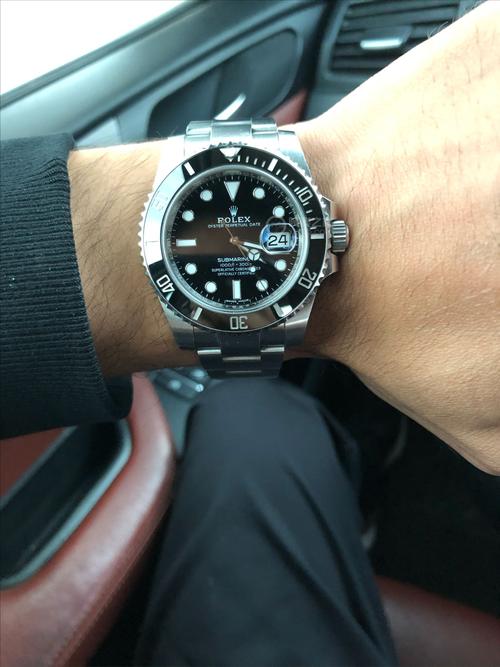
There’s also the matter of proportions.
Modern Sea-Dwellers, especially references like the Deepsea, are technically impressive but wear much larger than I personally enjoy. The 16600 sits in a very different place ergonomically. Thick, yes, but wearable. You notice the weight without constantly adjusting the bracelet.
The caseback contributes most of the thickness, which means the watch hugs the wrist more naturally than the specifications suggest. On paper, 14.5mm sounds substantial. In reality, it wears better than many newer dive watches that are technically thinner.
That’s something photographs don’t really communicate.
Specifications That Still Matter
The specs aren’t the whole story, but they’re still part of why this reference has aged so well.
| Specification | Rolex Sea-Dweller 16600 |
|---|---|
| Case Diameter | 40mm |
| Thickness | Approximately 14.5mm |
| Crystal | Sapphire |
| Water Resistance | 1,220m / 4,000ft |
| Movement | Rolex Caliber 3135 |
| Bracelet | Oyster bracelet in 904L steel |
| Production Period | 1988–2008 |
| Bezel | Aluminum insert |
| Date Magnifier | None |
Inside sits the Rolex Caliber 3135, one of the brand’s most respected modern-era movements. It isn’t decorative in the way haute horlogerie collectors might want. No hand-finishing theatrics here. But watchmakers consistently praise it for durability and serviceability.
And honestly, that’s more important to me in a dive watch.
According to Rolex’s official archive materials and long-term collector coverage from Hodinkee, the 3135 earned its reputation largely because it simply keeps running under hard use. That’s less romantic than discussing Geneva stripes, maybe, but it matters when you actually wear the watch regularly.
The Details I Didn’t Expect to Care About
What surprised me most wasn’t the movement or the depth rating.
It was the dial.
The Sea-Dweller 16600 has a strange visual balance that becomes more noticeable over time. The absence of the Cyclops gives the sapphire crystal a flat, uninterrupted appearance, and the smaller text layout feels restrained compared to current Rolex sports models.
At certain angles, especially outdoors, the glossy black dial almost disappears into the bezel. The white lume plots float against the surface. It’s subtle, but once you notice it, it’s hard to unsee.
The bracelet deserves mention too.
Older Rolex Oyster bracelets don’t have the tank-like solidity of modern versions, but that’s actually part of the comfort. The watch shifts slightly on the wrist instead of locking itself into place like a metal cuff. Some people interpret that as inferior construction. I don’t.
I think it’s just different.
Learning From Other Collectors
During my search, I spent an embarrassing amount of time reading old forum threads and collector articles. Some of the most useful perspectives came from Fratello Watches and Monochrome Watches, particularly discussions comparing late tritium dials to Super-LumiNova service-era examples.
I specifically wanted a Super-LumiNova dial.
That choice probably disappoints hardcore vintage purists, but I didn’t want to deal with weak lume or uneven aging. I wanted something I could wear at night, underwater, or during travel without treating it like a fragile object.
Sometimes practicality wins.
And that’s okay.
A Watch That Quietly Grows on You
The Sea-Dweller 16600 isn’t a replica watch that overwhelms you immediately. In fact, that’s probably why I ended up liking it so much.
Modern Rolex sports models often make an instant impression. Ceramic bezels shine harder. Cases reflect more light. Everything feels engineered to stand out across a room or on social media. The 16600 doesn’t really play that game.
Its appeal builds slowly.
You notice the proportions after a few days. Then the comfort. Then the way the bezel action feels slightly more mechanical and raw than newer Rolex clicks. Eventually you realize you’ve stopped taking it off.
That’s when I knew I’d made the right decision.
Walking out of the watch shop with the Sea-Dweller on my wrist felt important, though maybe not in the way I expected. It wasn’t just excitement over acquiring another watch. It felt more personal than that. My Oyster Perpetual came from my mother. The Sea-Dweller purchase became tied to a memory with my father.