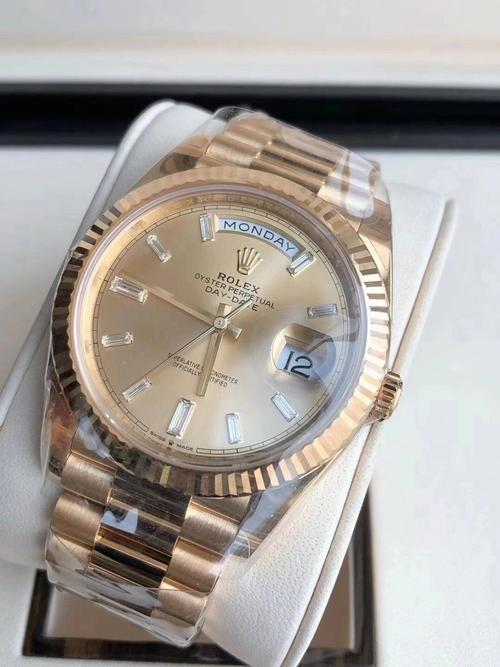
Six replica watches accompanied their owner on a summer vacation in August 2026. Over the course of the trip, the watches were worn in swimming pools and the sea, including during snorkeling sessions that reportedly involved depths of up to approximately six meters. None showed obvious signs of water intrusion afterward, and all continued running.
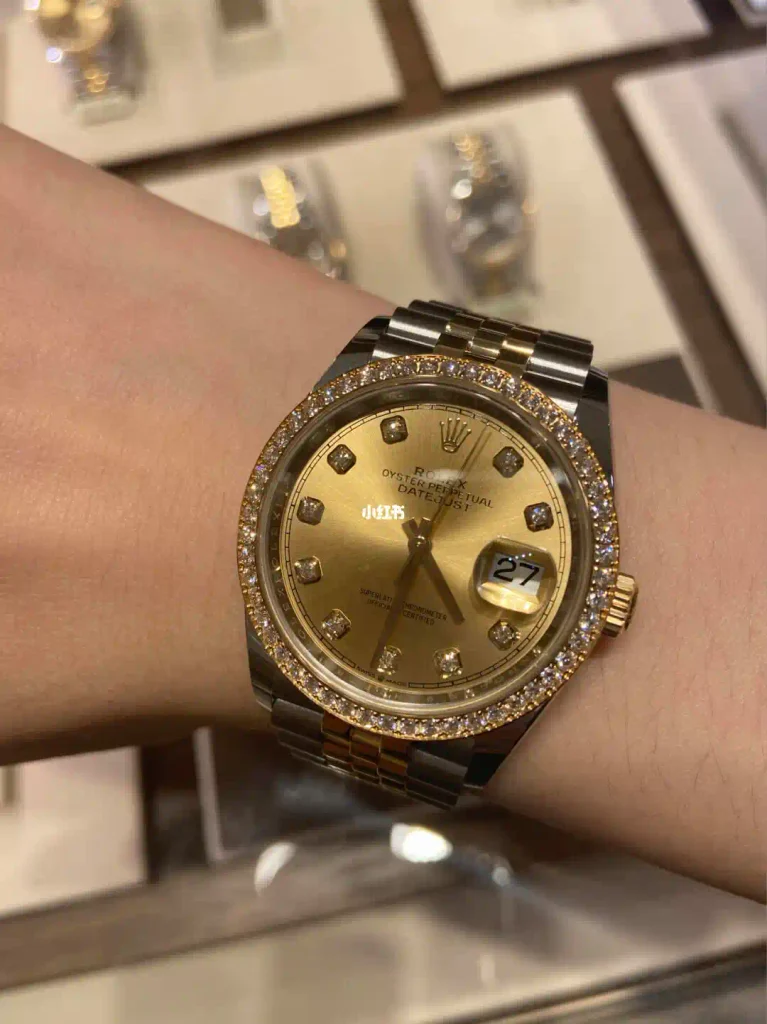
The collection was unusually varied. It included an Omega Aqua Terra, an Oyster Perpetual 41, an Omega Seamaster Diver 300M No Time to Die edition, an IWC Ingenieur, an IWC Mark XX, and a Datejust. According to the owner, the watches had survived between one and two hours of immersion during some activities, although the account did not include laboratory pressure-test results.
For anyone who has wondered whether replica watches can survive ordinary swimming, the experience sounds encouraging. Several models from different manufacturers apparently handled conditions that many owners would hesitate to expose them to.
Yet another enthusiast, testing watches with specialized equipment, encountered a very different situation. His VSF Submariner reportedly passed a 5-bar pressure test, while three GMT-Master II replicas from two manufacturers appeared to leak around the bezel or crystal area during wet testing. Other participants questioned whether the visible bubbles necessarily indicated a failed crystal seal, suggesting that trapped air beneath the bezel could complicate the interpretation.
Neither account establishes how reliably replica watches resist water across the broader market. The vacation report documents one owner’s experience under particular conditions, while the pressure-testing discussion raises questions about sealing and test interpretation that cannot be resolved from a short online description alone.
Together, however, they expose a weakness in the way water resistance is commonly discussed. A watch may survive repeated swimming without demonstrating compliance with a recognized testing standard, while another may produce an ambiguous result during a pressure test despite appearing mechanically sound.
The relevant question is not simply whether replica watches are waterproof. It is what evidence would justify trusting a particular watch around water, and how much confidence that evidence can reasonably provide.
Why a 300-Meter Submariner Replica Is Not Necessarily a 300-Meter Watch
The Rolex Submariner is one of the most recognizable diving watches in the world, and its association with underwater use is central to its identity. The modern Submariner Date reference 126610LN has a 41mm Oystersteel case, a screw-down Triplock winding crown, and a unidirectional Cerachrom bezel. Rolex specifies water resistance to 300 meters, a capability supported by the construction and testing of the genuine watch.
A replica manufacturer may reproduce the same external appearance, including the bezel markings, crown guards, caseback design, and other details associated with the original reference. It may also advertise a water-resistance figure that resembles the genuine specification.
Those similarities do not establish equivalent performance.
Water resistance is not a visual characteristic in the same sense as bezel color or dial printing. It depends on the integrity of several sealing interfaces, including the crystal, winding crown, caseback, and any additional openings associated with the watch’s construction. The geometry and condition of these components matter because water needs only one vulnerable entry point to reach the movement.
A case can look convincing while having poorly fitted gaskets. A crown may screw down smoothly without forming a reliable seal, and a crystal that appears properly seated may still have an installation problem that becomes apparent under pressure.
The difference between copying a design and reproducing its verified performance is especially important for diving watches. Rolex does not simply assemble a Submariner and infer its underwater capabilities from the shape of the case. The company subjects its watches to technical testing, including pressure testing as part of its servicing procedures.
A replica carrying the appearance of a Submariner does not inherit the manufacturer’s testing results. Even if its case dimensions are close to the genuine reference, the relevant evidence must concern the actual replica being evaluated.
This principle extends beyond Rolex. A replica Omega Seamaster Diver 300M, Tudor Pelagos, or Blancpain Fifty Fathoms may reproduce the appearance of a professional diving watch without having undergone the same validation procedures as the authentic product.
The original model’s depth rating is therefore useful as a description of the design being imitated, not as proof of the replica’s capability.
What the International Standard Actually Requires
ISO 22810:2010 establishes requirements and test methods for water-resistant watches. The standard addresses water penetration and specifies procedures used to evaluate whether a watch meets its declared resistance.
It also distinguishes ordinary water-resistant watches from watches intended for diving, which are addressed separately by ISO 6425.
This distinction matters because the expression water-resistant is often treated as though it represents a single, universal level of protection.
In practice, different watches are designed and tested for different conditions. A dress watch intended to tolerate incidental moisture is not necessarily suitable for the same activities as a professionally rated diving watch.
Pressure is commonly expressed in bar, with one bar corresponding to 100,000 pascals. The pressure associated with approximately ten meters of water depth is close to one additional bar, although actual conditions depend on factors such as water density and atmospheric pressure.
These relationships explain why water-resistance ratings are often expressed using meters and pressure units. They do not mean that a watch can safely be used for every activity occurring above the corresponding depth.
The conditions under which a watch was tested, its current condition, and the manufacturer’s instructions remain relevant.
For replica watches, an additional question arises: whether the manufacturer or seller has actually performed a meaningful test at all.
A number printed on a dial or included in an online product description is a claim. Without supporting test information, it cannot establish that the individual watch meets a recognized standard.
The Cases That Complicate the Usual Advice
In June 2026, a replica-watch owner asked whether anyone had experienced water damage after swimming or wearing a replica in the sea. The resulting discussion included accounts that pointed in different directions.
One participant reported that a VSF Datejust 36 had passed a 5-bar pressure test at a local watch-repair service. Another described using a replica Tudor Pelagos during a scuba dive to approximately 40 feet without subsequent problems. Several owners said they had regularly worn their replicas while swimming, while others advised avoiding immersion unless the individual watch had been tested.
A different contributor described a watch developing condensation after washing dishes. The owner attributed the problem to a faulty crown tube and reported that the watch subsequently passed a pressure test after repair.
These experiences are useful because they challenge overly simple claims.
It would be inaccurate to suggest that every replica will leak as soon as it encounters water. Some owners report years of swimming without obvious damage, and individual replicas have reportedly passed professional pressure tests.
It would be equally inaccurate to treat those successful experiences as evidence that all watches from the same manufacturer are safe for swimming.
A watch that survives one exposure has demonstrated only that no apparent failure occurred during that exposure. It has not necessarily been evaluated under controlled conditions, and the absence of visible condensation does not establish the absence of every possible moisture-related problem.
The opposite limitation applies to isolated failures. A single defective crown tube does not establish that an entire factory’s production is unreliable.
What the accounts reveal is variation in the available evidence. Some owners rely on personal experience, others report results from professional equipment, and a few describe mechanical problems that required intervention.
Those are different forms of information, and they should not be treated as equally conclusive.
One Submariner Passed While Three GMTs Raised Questions
The December 2025 pressure-testing discussion is particularly instructive because it involved multiple watches and an attempt to identify a specific failure point.
The tester reported that a VSF Submariner passed at 5 bar. Three GMT replicas, including two from ARF and one from VSF, appeared to produce bubbles around the bezel or crystal during wet testing.
At first glance, the results might suggest that the Submariner’s sealing construction was more dependable than that of the GMT replicas.
But the discussion did not establish that conclusion.
One participant suggested that the bubbles might have come from air trapped beneath the bezel rather than from inside the case. Others proposed inspecting the crystal gasket or conducting additional tests.
This distinction is technically important because a rotating bezel can contain spaces where air becomes trapped. Bubbles appearing near the bezel do not necessarily identify the location of a leak in the sealed watch case.
A properly interpreted pressure test requires an understanding of the equipment, the procedure, and the watch’s construction. Observing bubbles without establishing their source may lead to an incorrect diagnosis.
The account therefore provides evidence of a testing concern, not proof that all GMT replicas from the named factories have defective seals.
It also demonstrates why online discussions about water resistance are often more complicated than a simple pass-or-fail label suggests.
Why the Individual Watch Matters More Than the Factory Name
Replica manufacturers are frequently compared according to dial accuracy, movement construction, bracelet finishing, and other visible or mechanical characteristics. Those comparisons can be useful when they are specific to a model and supported by reliable observations.
Water resistance introduces another variable because it depends heavily on the condition and assembly of individual components.
A manufacturer might produce a case with generally accurate dimensions while allowing variation in gasket installation or crown-tube fitting. Two watches from the same production line could therefore behave differently under pressure, even if they appear almost identical in photographs.
A September 2025 contributor who described examining more than 350 replica watches reported repeatedly finding dry gaskets, insufficient lubrication, and loose casebacks. The account was presented as the experience of someone working directly with watches, although the underlying sample was not independently audited and no standardized defect-rate analysis was provided.
The report is valuable as a description of possible assembly problems. It cannot establish how frequently those problems occur across the entire replica industry.
In July 2026, another enthusiast described finding inadequately lubricated seals in watches from several manufacturers, reinforcing the concern that a factory’s reputation for external accuracy may not reliably indicate the condition of its sealing components.
A watchmaker participating in a separate September discussion added an important qualification: some sealing problems may be relatively straightforward to address, while others involve poorly manufactured threads, crown tubes, crystal gaskets, or case components that require substantially more work.
This helps explain why the term waterproofing service can be misleading when used without a description of what was actually performed.
Lubricating a gasket, replacing a damaged seal, correcting an assembly problem, and conducting a pressure test are related but distinct activities. Completing one does not establish that the others were necessary or successfully performed.
A seller may advertise a watch as having been waterproofed, but that statement is difficult to evaluate unless the service is described and the resulting performance has been tested.
The practical significance is not that every replica needs the same repair procedure. It is that water resistance should be assessed according to the condition of the specific watch rather than assumed from its manufacturer or price category.
What a Pressure Test Can and Cannot Prove
Professional pressure testing provides stronger evidence than an unsupported product claim or a photograph of a watch submerged in water.
A qualified watchmaker may use dry-testing equipment to evaluate case deformation under controlled pressure conditions, or other appropriate equipment and procedures to investigate possible leakage. Different instruments have different operating principles and limitations, so the reported result should be understood in relation to the test that was actually performed.
A result such as passed at 5 bar is more informative when the equipment, procedure, and watch condition are known.
It is less informative when presented as an isolated number without context.
A test can establish that a particular watch met specified conditions at a particular time. It does not guarantee that the watch will remain equally resistant after impact, mechanical wear, improper crown operation, or changes to its seals.
Rolex’s own servicing process illustrates why water resistance is treated as a condition requiring ongoing verification. The company replaces seals during servicing, checks the assembled case, and performs pressure testing before returning the watch to its owner.
Those procedures would be unnecessary if the original construction alone guaranteed permanent water resistance.
For a replica watch, a documented pressure test may substantially reduce uncertainty about its present condition. The result still needs to be interpreted conservatively, particularly when the watch has no manufacturer-backed testing program comparable to that of the original luxury brand.
A passing result at a modest pressure level should not be described as proof of professional diving suitability.
Likewise, a test performed before the watch is shipped does not establish that its condition can never change.
The strongest conclusion supported by a properly documented test is limited but useful: the individual watch satisfied the specified testing conditions when examined.
That is considerably more meaningful than assuming it is safe because another owner successfully swam with the same model.
The Difference Between Surviving Water and Being Designed for It
There is a reason inexpensive digital watches sometimes survive swimming, rain, and other conditions despite having relatively modest specifications. Water resistance depends on effective construction and sealing, not exclusively on the retail price or mechanical sophistication of the watch.
Conversely, an expensive mechanical watch can develop a leak if its seals deteriorate or its case is damaged.
This is why comparing replica watches solely by their purchase price or the complexity of their movements provides little reliable information about their ability to resist moisture.
A chronograph introduces additional case openings associated with its pushers, while a simple three-hand watch may have fewer external controls. That difference can influence sealing design, although it does not establish that every chronograph is less water-resistant than every simpler watch.
The genuine Rolex Cosmograph Daytona, for example, is engineered and rated for water resistance despite having chronograph pushers. Its performance depends on the complete construction and testing of the watch rather than the absence of openings.
A replica Daytona cannot claim equivalent resistance merely because its pushers resemble those of the genuine model.
The same reasoning applies to watches fitted with display casebacks, additional crowns, or unusual case constructions. The number of potential sealing interfaces is relevant, but the quality of their design and assembly ultimately determines performance.
In August 2026, an owner who reported successfully swimming with six replica watches also acknowledged that the experience did not prove they were suitable for diving and advised against assuming such capability without testing.
That qualification is more informative than the apparent success of the vacation experiment itself.
The watches survived the conditions described by their owner. Whether they would pass a standardized pressure test, remain resistant after extended use, or withstand more demanding conditions was not established.
When Water Resistance Becomes an Ownership Decision
The practical importance of water resistance depends on how a watch will be used.
Someone who wears a replica primarily in an office may encounter occasional rain or incidental splashes, while another owner may want to swim, sail, or spend long periods in the ocean. The consequences of a sealing failure also vary with the watch’s movement, the availability of replacement components, and the owner’s willingness to pay for repairs.
These differences make universal recommendations difficult to justify.
For a watch that will regularly encounter water, professional testing provides a more defensible basis for assessing its present condition than relying on factory reputation or anecdotal success. If the watch fails, the cause should be investigated by someone qualified to evaluate its construction rather than assuming that every problem can be corrected by tightening the caseback or applying lubricant.
Owners should also recognize that some repair shops may decline to work on counterfeit watches. Access to appropriate testing and servicing cannot be assumed simply because a local shop handles genuine luxury watches.
If moisture appears beneath the crystal, continued use may increase the risk of damage to the movement and dial. The watch should be kept away from further water exposure and examined promptly by a qualified repairer willing to service it. Heating the case with a hair dryer or attempting improvised pressure tests can introduce additional risks and should not be treated as substitutes for professional assessment.
For activities where dependable water resistance is essential, a watch with a verified rating, suitable construction, and reliable service support may be a more appropriate choice than an untested replica, regardless of how closely the latter resembles a professional diving model.
That recommendation does not require assuming that every replica is poorly made. It follows from the difference between demonstrated performance and performance that has merely been advertised.
The Evidence Behind the Number
Replica watches have become increasingly convincing in areas that buyers can examine directly. Case proportions, dial details, bracelet construction, and movement appearance are all subjects of extensive comparison, often supported by photographs and detailed enthusiast discussions.
Water resistance is different because the most important evidence is largely invisible during ordinary inspection.
A watch may look identical to a genuine diving model while lacking verified sealing performance. Another may appear less sophisticated yet pass a meaningful pressure test and survive years of normal use. Individual owner experiences demonstrate that both successful and unsuccessful outcomes occur, but they do not provide the representative data needed to rank entire manufacturers by water-resistance reliability.
The most credible evidence concerns the individual watch, the procedure used to evaluate it, and the conditions under which it was tested.
A depth marking, a factory reputation, and a successful swimming anecdote can all contribute to a discussion, but none should be mistaken for a comprehensive demonstration of water resistance.
For someone considering a replica watch primarily because of its resemblance to a Submariner, Seamaster, or another professional diving model, that distinction deserves attention before the watch encounters water.
The appearance of a diving watch can be reproduced with remarkable precision. Its underwater performance remains a separate engineering question, one that can only be answered with evidence about the watch itself.